Home Blog Details


Home Blog Details
Post By || 2026-05-04
A lot of car owners hesitate before installing a sun control film for car because of one simple doubt—does it actually work, or is it just another overhyped product? This confusion usually comes from past experiences with low-quality window tint films that didn’t deliver noticeable results.
To answer this properly, you need to understand where the heat inside your car actually comes from. Most people assume it’s just sunlight entering through the glass. In reality, the biggest contributor is infrared radiation, which carries heat energy. Standard car glass allows a significant amount of this energy to pass through, where it gets trapped inside the cabin. That’s why your car heats up quickly even when it’s parked with windows closed.
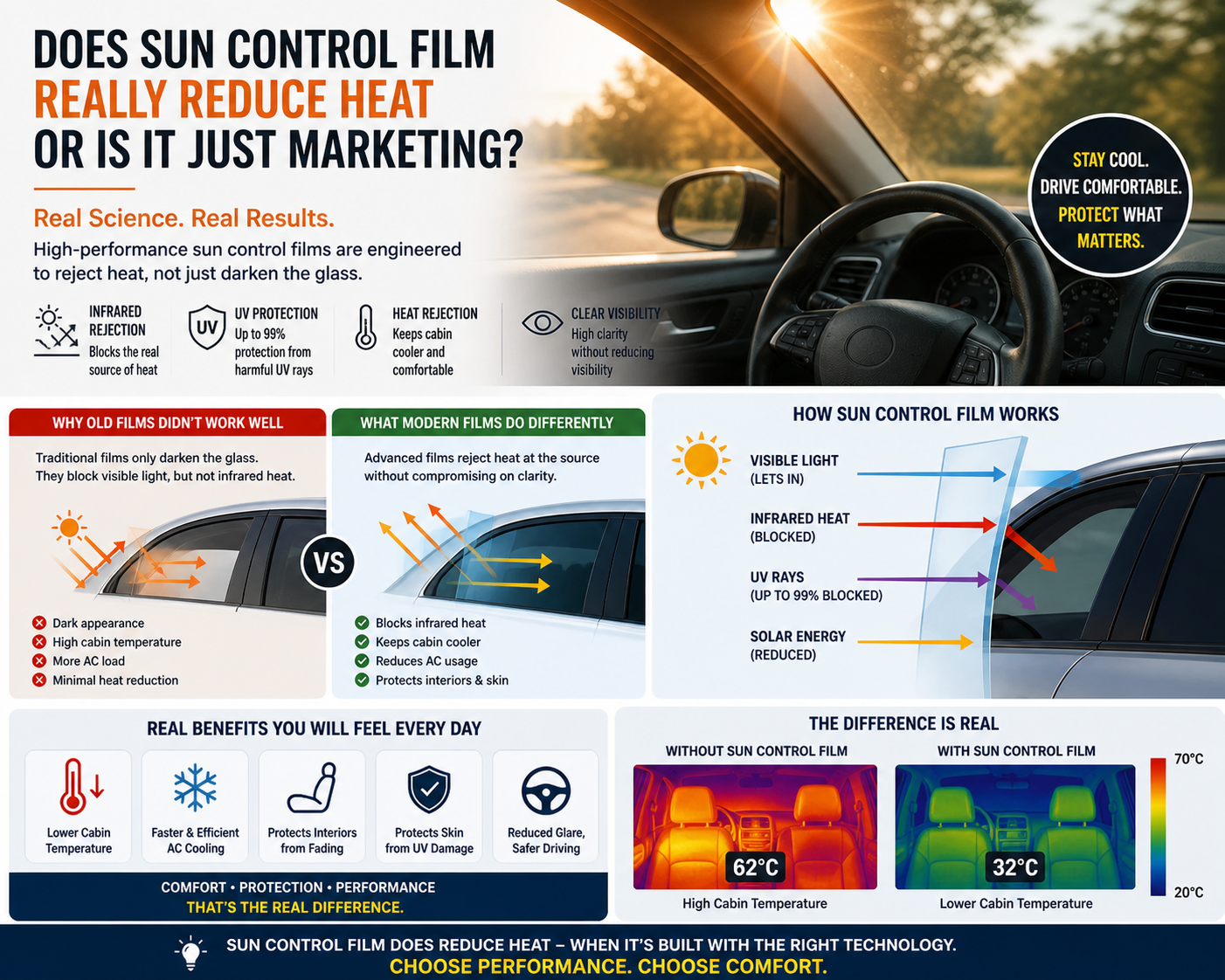
Traditional car window tint films focused on reducing brightness by darkening the glass. While this helped with glare, it did very little to block infrared heat. So even though the car looked darker from the outside, the cabin temperature remained high.
This created the impression that window films don’t really work.
Today’s heat control window films are designed to target the actual problem—heat energy.
Instead of blocking visible light, they filter:
This is achieved through advanced technologies like nano ceramic film, which allows light to pass through while rejecting heat.
When installed correctly, a high-quality window film for car can:
The difference becomes especially noticeable during peak summer conditions.
Yes—but only if you choose the right film.
The effectiveness ultimately comes down to the type of film you install. High-performance options like Autozcrave Spectra Series Sun Control Window Film are designed to target heat at the source, making the difference noticeable in real driving conditions.
Sun control film does reduce heat—but not all films do it effectively.
The result depends on the technology used.
If the film blocks infrared heat, it works.
If it only darkens the glass, it doesn’t.
FAQs – Sun Control Film & Heat Reduction
Yes, high-quality sun control films reduce heat by blocking infrared radiation, which is the main source of cabin temperature rise. The effectiveness depends on the film technology used.
It works—but only if the film is built with heat rejection technology. Basic or low-quality films may only darken the glass without significantly reducing heat.
Modern films use infrared rejection technology to block heat-carrying rays while allowing visible light to pass through, keeping the cabin cooler without making the glass too dark.
No. Darker tint mainly reduces visible light and glare. Heat reduction depends on infrared blocking capability, not darkness.
Nano ceramic films are considered the most effective because they offer strong heat rejection, UV protection, and clear visibility without interfering with signals.
Yes. By lowering cabin temperature, it reduces the load on your car’s AC, helping it cool faster and work more efficiently.
Yes, most high-quality films block up to 99% of harmful UV rays, protecting both passengers and the car’s interior.
Yes, especially in peak summer. You’ll notice reduced heat buildup, faster cooling, and improved driving comfort.
Yes, especially advanced films designed for high heat environments. They are built to handle intense sunlight and high temperatures.
No. Only films with infrared and solar energy rejection technology effectively reduce heat. Basic dyed films may not provide significant cooling.


Most people install a sun control film for car to reduce heat, but there’s another factor that often gets ignored—UV exposure while driving. In a country like India, where sunlight intensity is high for most of the year, long hours behind the wheel can quietly expose your skin to harmful ultraviolet rays.
The common assumption is that car glass already blocks UV radiation. That’s only partially true.
Standard automotive glass blocks a portion of UVB rays, but UVA rays—responsible for skin ageing and long-term damage—can still pass through. This is why even regular drivers experience tanning, uneven skin tone, and in extreme cases, long-term skin issues despite being inside the car.

When people search for sun control film price in India, the expectation is simple—find something affordable that reduces heat. But pricing in this category varies widely, and without understanding what drives that difference, it’s easy to either overpay or choose a film that doesn’t perform.
The price of a window film for car is not just about brand—it’s about technology.

When choosing a car window tint film, most people get stuck comparing types—ceramic, carbon, or dyed. On paper, they all promise heat reduction and comfort. But in real Indian conditions, where temperatures push limits, the difference between these options becomes much more noticeable.
Understanding this difference is what helps you avoid wasting money on the wrong film.

If your goal is simple—reduce heat inside your car—then choosing just any window film for car won’t get the job done. Indian summers are not mild, and most basic window tint films simply aren’t designed to handle that level of heat. This is why many car owners install a film and still feel disappointed when the cabin temperature barely improves.
The key mistake is focusing on shade instead of heat rejection.
A lot of car owners hesitate before installing a sun control film for car because of one simple doubt—does it actually work, or is it just another overhyped product? This confusion usually comes from past experiences with low-quality window tint films that didn’t deliver noticeable results.
To answer this properly, you need to understand where the heat inside your car actually comes from. Most people assume it’s just sunlight entering through the glass. In reality, the biggest contributor is infrared radiation, which carries heat energy. Standard car glass allows a significant amount of this energy to pass through, where it gets trapped inside the cabin. That’s why your car heats up quickly even when it’s parked with windows closed.
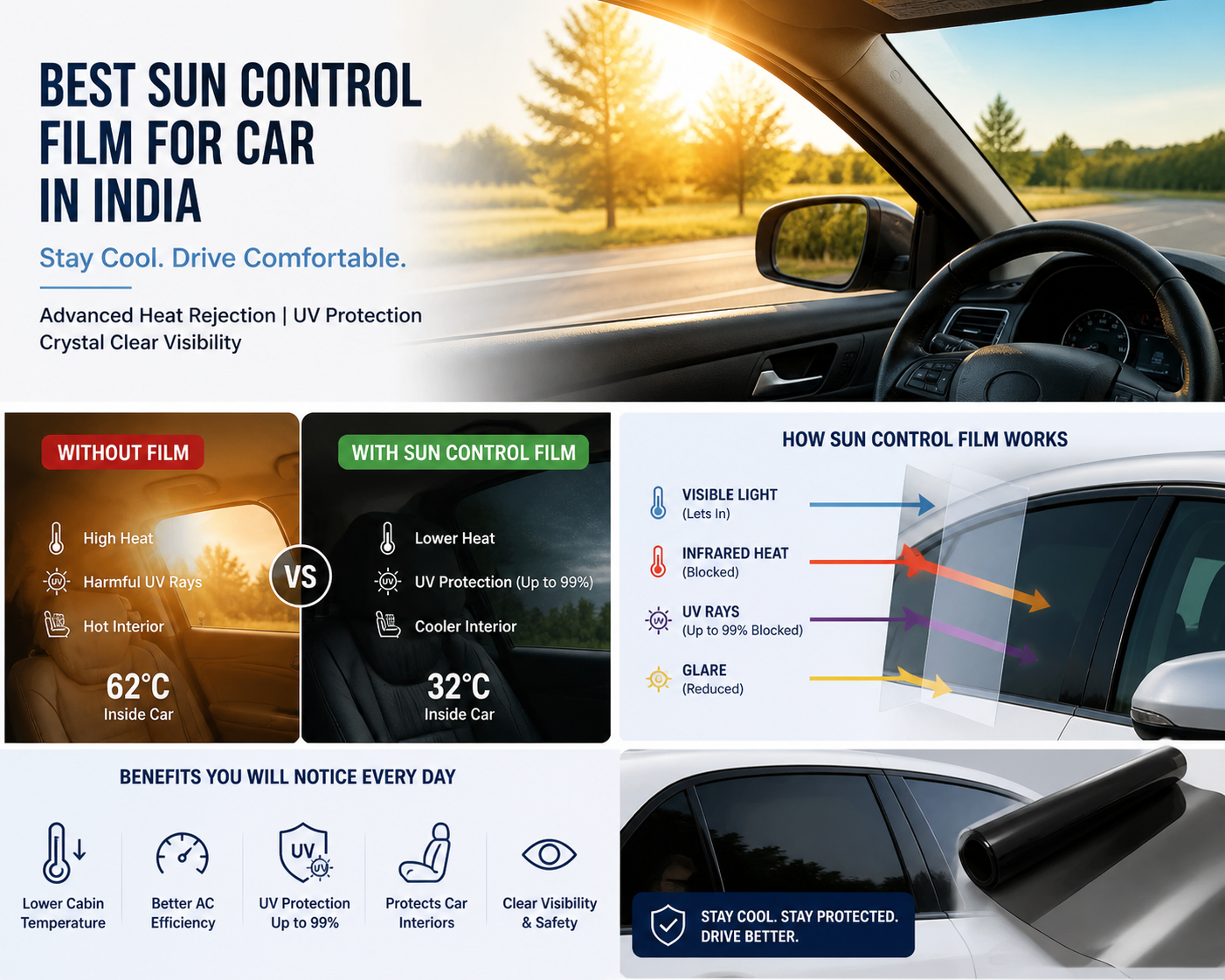
Step into a car parked under the Indian sun and you immediately understand the real problem—heat, not just light. The steering wheel burns, the seats trap warmth, and even after switching on the AC, it takes several minutes before the cabin becomes bearable. This is exactly why so many people search for the best sun control film for car in India, but end up confused by too many options that all claim the same thing.

A lot of car owners in India are stuck in a dilemma. On one side, there’s unbearable heat that makes driving uncomfortable. On the other, there’s the fear of getting fined for using a car window tint. So the obvious question becomes—can you use a sun control film for car without getting into legal trouble?
The answer is yes. But only if you understand where most people go wrong.

Autozcrave is a team of dedicated automotive enthusiasts and detailing experts who are committed to providing top-notch auto detailing solutions.
Lets make a better connection on Facebook and Instagram
Get the Latest Updates on New Product and Upcoming Sales
All rights reserved, Copyright 2024. Privacy Policy | Terms of Use